
Blog
Our blog offers a wealth of knowledge and insights into the world of Jiu Jitsu. Here, you will find articles ranging from technique breakdowns and training tips to event coverage and interviews with top athletes. Stay updated with our latest posts to deepen your understanding of Jiu Jitsu and stay connected with the 10th Planet Jiu Jitsu: Torrance community.
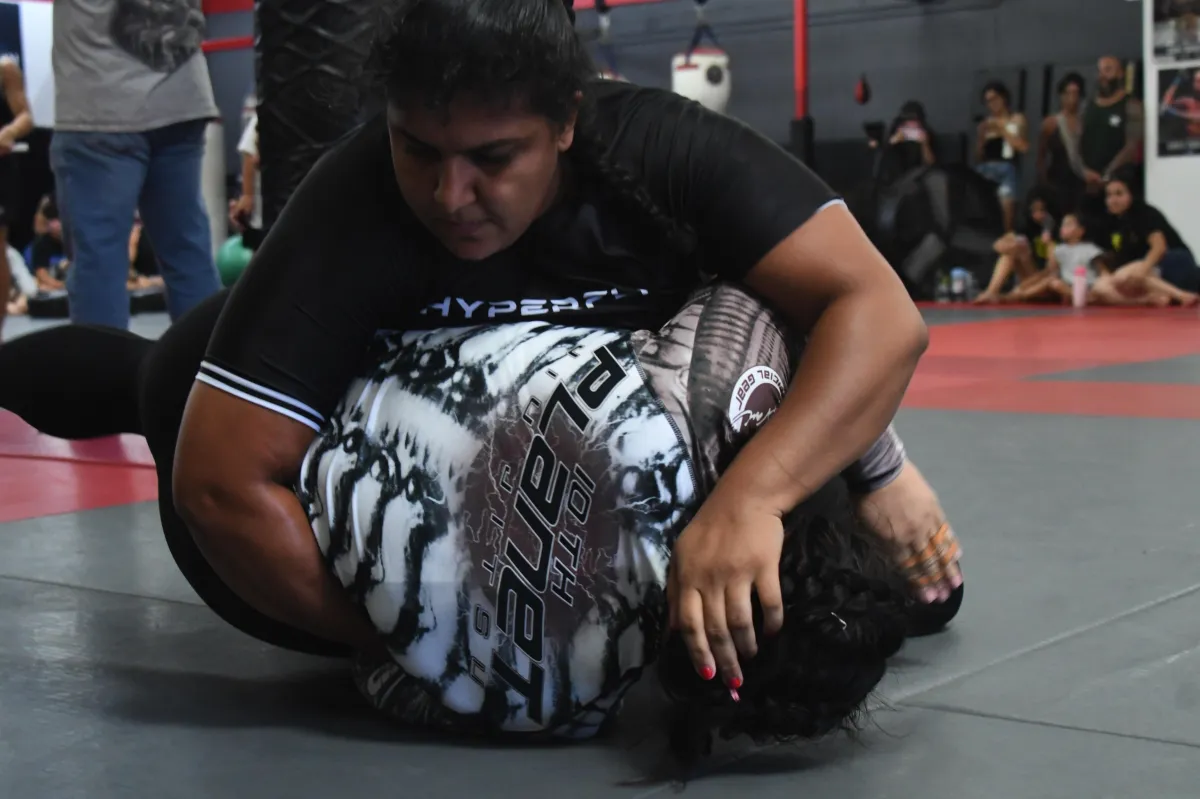
Competed at 26. I Ran It Back at 34, Postpartum, as a Brown Belt.
I competed at 26. I Ran It Back at 34, Postpartum, as a Brown Belt.

Ten years ago, I competed at the California Submission Series at CMMA as a fresh blue belt.
I was 26. I was nervous. I overprepared for everything. Overwhelmed with nerves.
This time, I came back to the same local tournament at 34 as a brown belt, a postpartum mom, and someone who had not been training nearly as much as she used to.
The result was different.
The feeling was different.
But the most important part was that I showed up.
What Was the First Time Around Like?
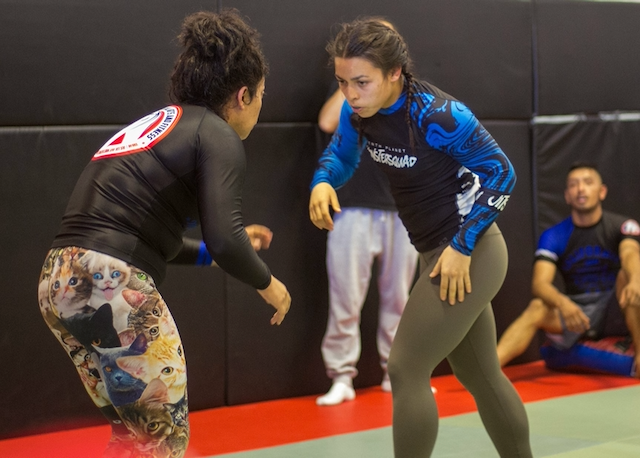
At 26, I competed in the 160 pounds and above division and took first place. I demolished the bracket, finishing every competitor by submission.
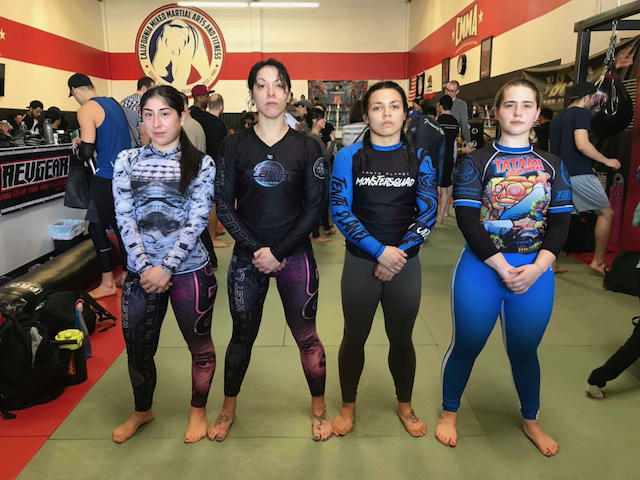
2018 California Submission Series at CMMA. Kirsten, a fresh blue belt, stands with other competitors before the event.
On paper, it looked perfect.
Inside my head, it did not always feel that way.
I had always been insecure about my performance. I struggled with public speaking. In gymnastics, I trained hard and cared deeply, but I never got the results I wanted. That experience taught me to question myself even when I had put in the work.
Jiu Jitsu came more naturally to me.
That is why it stuck.
I still stressed about training. I stressed about my weight. I felt like I had to over-prepare before I could give myself permission to compete. But the weight classes gave me something I had not experienced before: a sense of “come as you are.”
I was bigger than most of the girls I competed against. There was no pretending otherwise.
It was war.
The competition was submission-only, with no points or advantages. The format rewarded exactly what I wanted to do: engage, solve problems, and finish. The official California Submission Series rules describe the same basic structure, with a first takedown used to decide overtime when there is no submission.
At that age, I thought winning would finally make me feel confident.
It helped.
But confidence does not permanently arrive because of one bracket. It has to be rebuilt repeatedly, usually under circumstances that are much less convenient.
What Changed Over the Next Ten Years?
A lot.
I became a brown belt. I became a mom. I became the owner of 10th Planet Jiu Jitsu: Torrance. My responsibilities multiplied, while my available training time shrank.
I was not in the shape I wanted to be.
Shaking the weight had been difficult, so entering the heavier division: the “torta division,” as I affectionately called it: did not scare me. I had competed there before. I knew how to walk into that room and accept the reality of my body that day.
That was a major difference between 26 and 34.
At 26, I wanted to control every variable.
At 34, I understood that control is mostly an illusion.
I had not been able to train as much as I did in 2020, let alone as much as I trained as a blue belt. My postpartum return was not linear. My body had changed, my schedule had changed, and my priorities had changed.
My pregnancy itself was smooth, but labor and delivery were brutal. What I hoped would be a natural water-birth turned into an 24 hr labor with an epidural and then an emergency C-section.
My scar took a long time to feel “normal” again (or at least it felt that way). When I started thinking about competing, that was my biggest worry: the moment someone put a knee on belly, I pictured myself stapled to the mat—unable to move, unable to recover, just stuck.
That was the biggest hurdle in rebuilding my confidence to compete again. If I’m being honest, it was fear—the fear that I wouldn’t be able to recover… and I’d lose.
A lot of my teammates at other 10th Planet affiliates would hit me up like, “Where are you? Why aren’t you in these tournaments?” We all came up together, and a part of me felt like I should be out there on the competing mats too. Some where just doing super fights or the biggest stage ADCC.
To be honest, it’s really hard NOT to compare.
Comparison is the thief of joy.
But the truth is, the juggle is hard. And competing is hard—even when you want it.
I didn’t fully account for what it would feel like to manage the gym, keep up with bills, run a home, and be a new mom. Training got pushed to the side, and that bothered me. I didn’t realize until later that this has been one of my biggest challenges: balancing who I am as a coach and business owner with who I still want to be as an athlete.
But competing again was still a goal.
Big or small, getting back out there matters to me. It’s something I want to do before I earn my black belt.
A few of our members were competing, too. That made the decision easier. I had this attitude of, “Why not? It’s just an organized open mat.”
That mindset got me through the door.
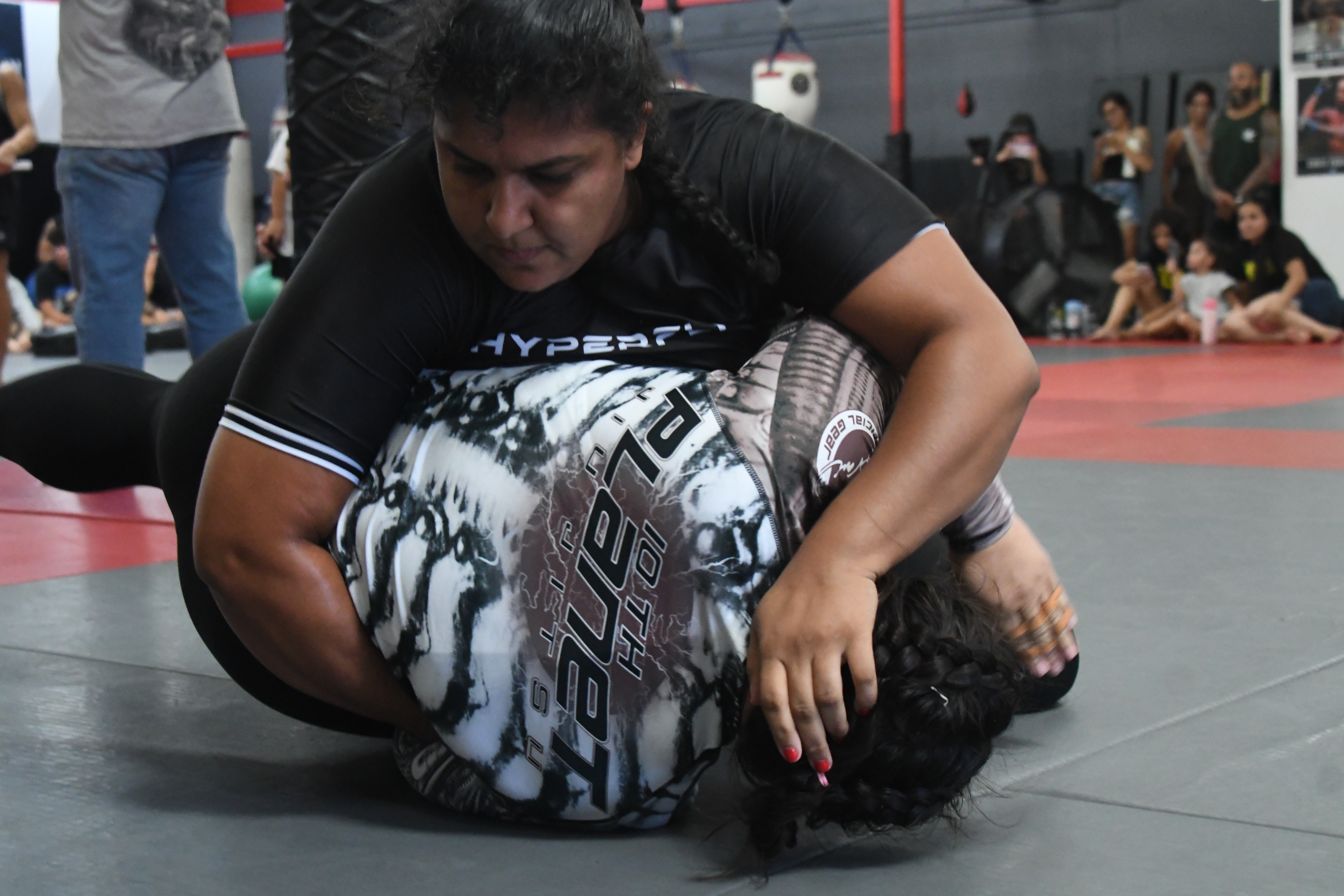
Why Was I Less Nervous as a Brown Belt?
Walking into the gym as a blue belt, I was really nervous.
The nerves used to get so bad that they turned me off from competing altogether. That was always the worst part—not the matches themselves, but everything I put myself through before I ever stepped onto the mat.
Walking in as a brown belt, I was shocked that I was not nervous.
That does not mean I felt invincible. I did not.
I knew I was underprepared compared to my younger self. I knew my conditioning was not where I wanted it to be. I knew I could not rely on endless rounds and aggressive pace to solve every problem.
But I also knew more.
I understood how to manage adrenaline. I understood that a bad moment was not the same thing as a bad performance. I understood that one exchange could go wrong without defining the entire day.
Most importantly, I had spent years teaching and training in an environment built around technical problem-solving, standing techniques, and high-percentage submissions.
That is the culture we work to create at 10th Planet Jiu Jitsu: Torrance. No-Gi submission grappling is not only about athletic explosiveness. It is about making decisions under pressure, identifying connections, and staying composed when the first plan fails.
I had to trust that process in my own competition.
After that day, competing did not bother me the way it used to. The nerves had not disappeared completely, but they no longer felt powerful enough to keep me from doing it again.
What Happened in the First Round?
My first opponent had more weight and better pressure.
She caught me with a wrist lock.
I’ll give her that.
I did not win the first round, and losing was frustrating. It was especially painful because some of my students were watching. Losing in front of the people I coach is a hard pain to swallow.
I wanted to represent myself well. I wanted them to see the brown belt, the coach, the person who is supposed to have answers.
Instead, I had to show them something more honest.
I had to show them what it looks like when the answer is keep going.
That matters to me as a coach. Most of our students are younger, and it can be hard for them to find role models who actually live by the lessons they preach. I cannot tell them to be resilient, take risks, and keep showing up if I am unwilling to do the same when the outcome is uncertain.
In life, you are not going to hit a home run every time you step up to bat. You will lose. Honestly, you will probably lose more often than you win. It is incredibly rare for anyone to win every tournament they enter.
The example I want to set is not that great athletes never lose. It is that they do not let losing make them quit.
As long as you do not quit, you cannot lose.
The first result could have followed me into the next match. That is one of the most dangerous parts of competition: carrying an emotional exchange into a completely different round.
I did not want that baggage.
I did not want to spend the next match proving that the first loss was a fluke. I wanted to compete in front of me, not against the match behind me.
So I reset.
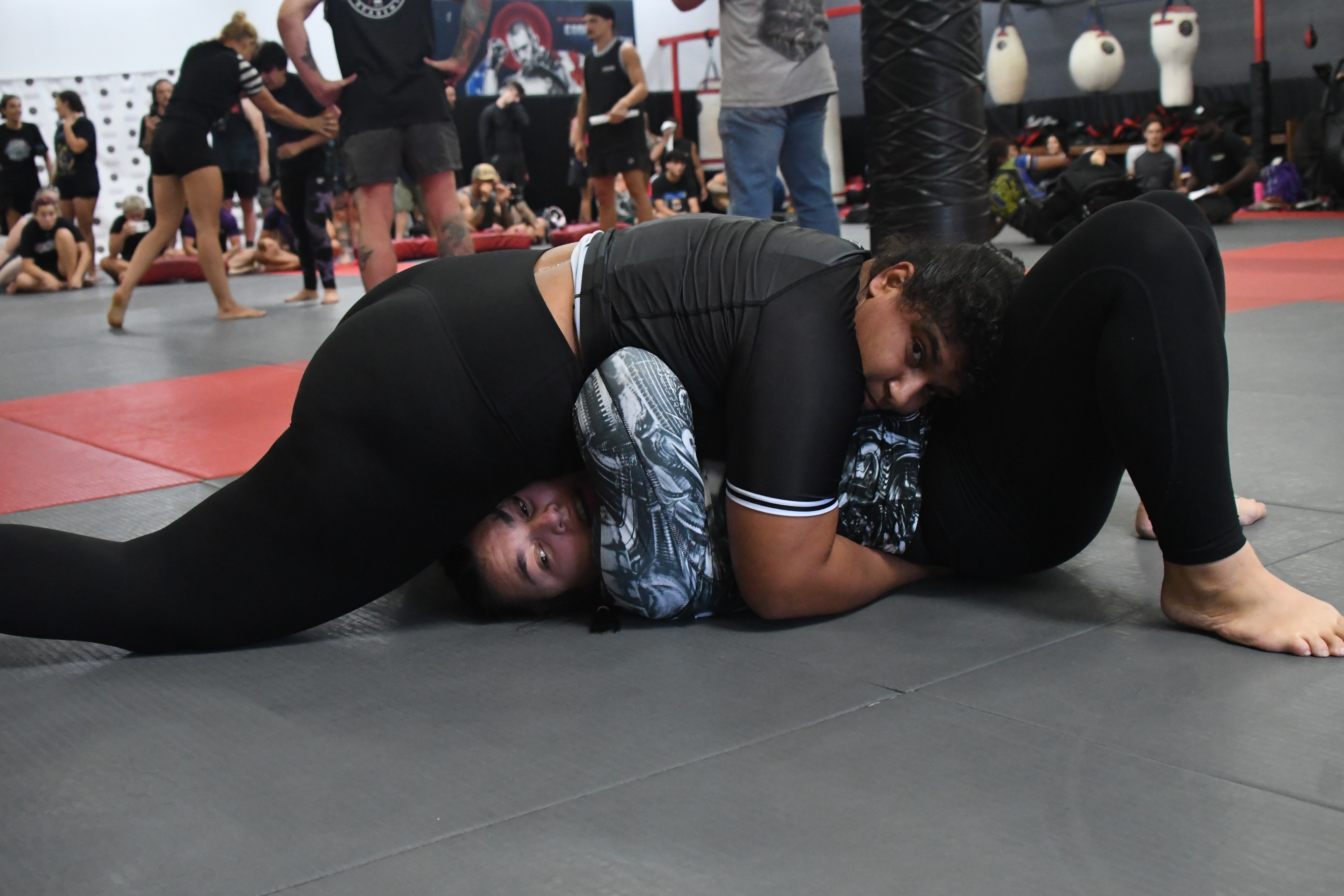
How Did the Second Match Go?
I wanted a submission.
I was frustrated, but I did not want frustration to make me reckless. I wanted to make a clean decision, find an opening, and finish the match.
I hit a Choi bar.
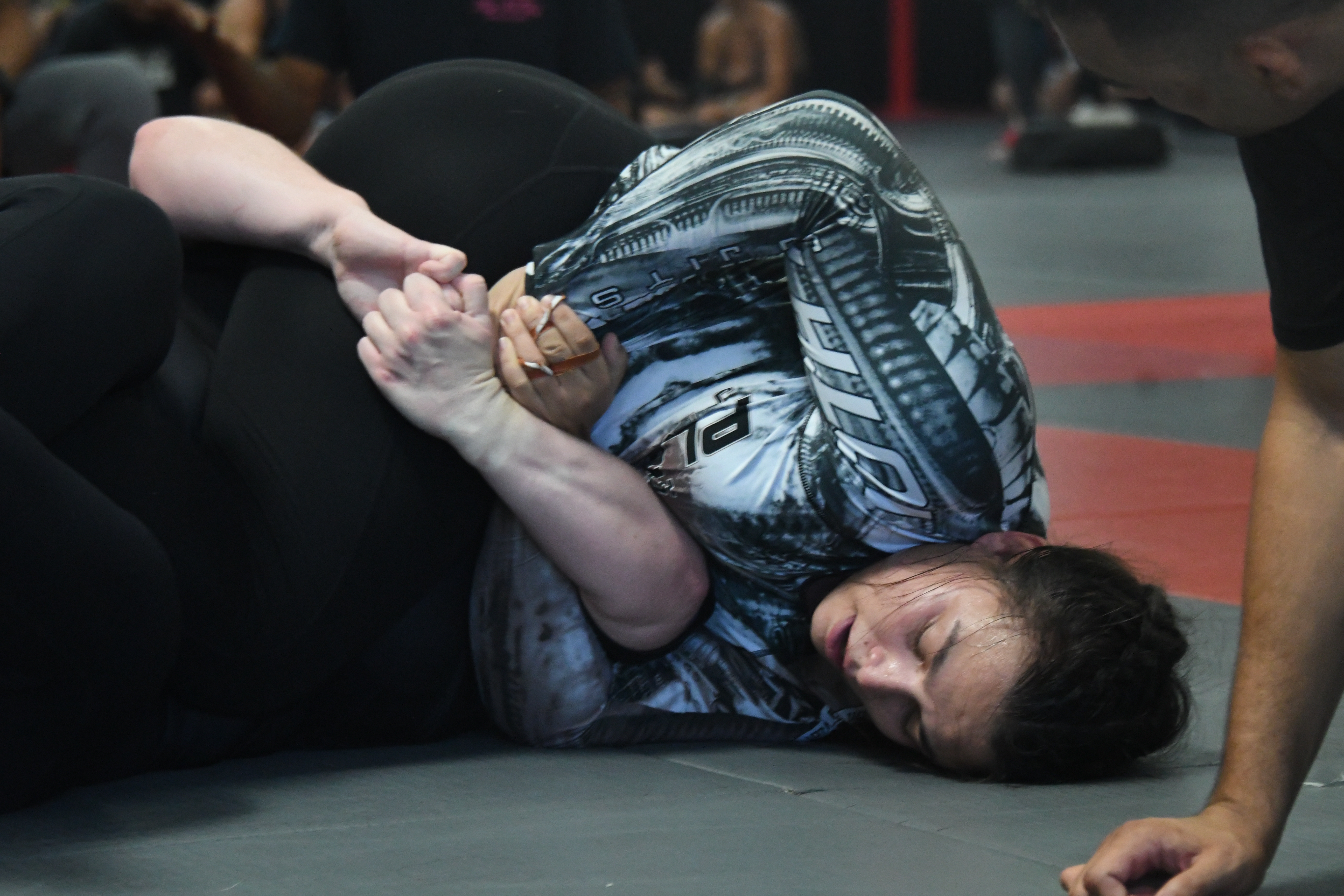
That moment mattered to me because it was not about pretending I was still 26. It was about using the skills I had developed over the last decade, even while carrying different physical and emotional circumstances.
The older version of me was not faster.
She was not lighter.
She was not training full-time.
But she was more comfortable with imperfection.
That is a potent kind of progress.
How Did Our Team Do?
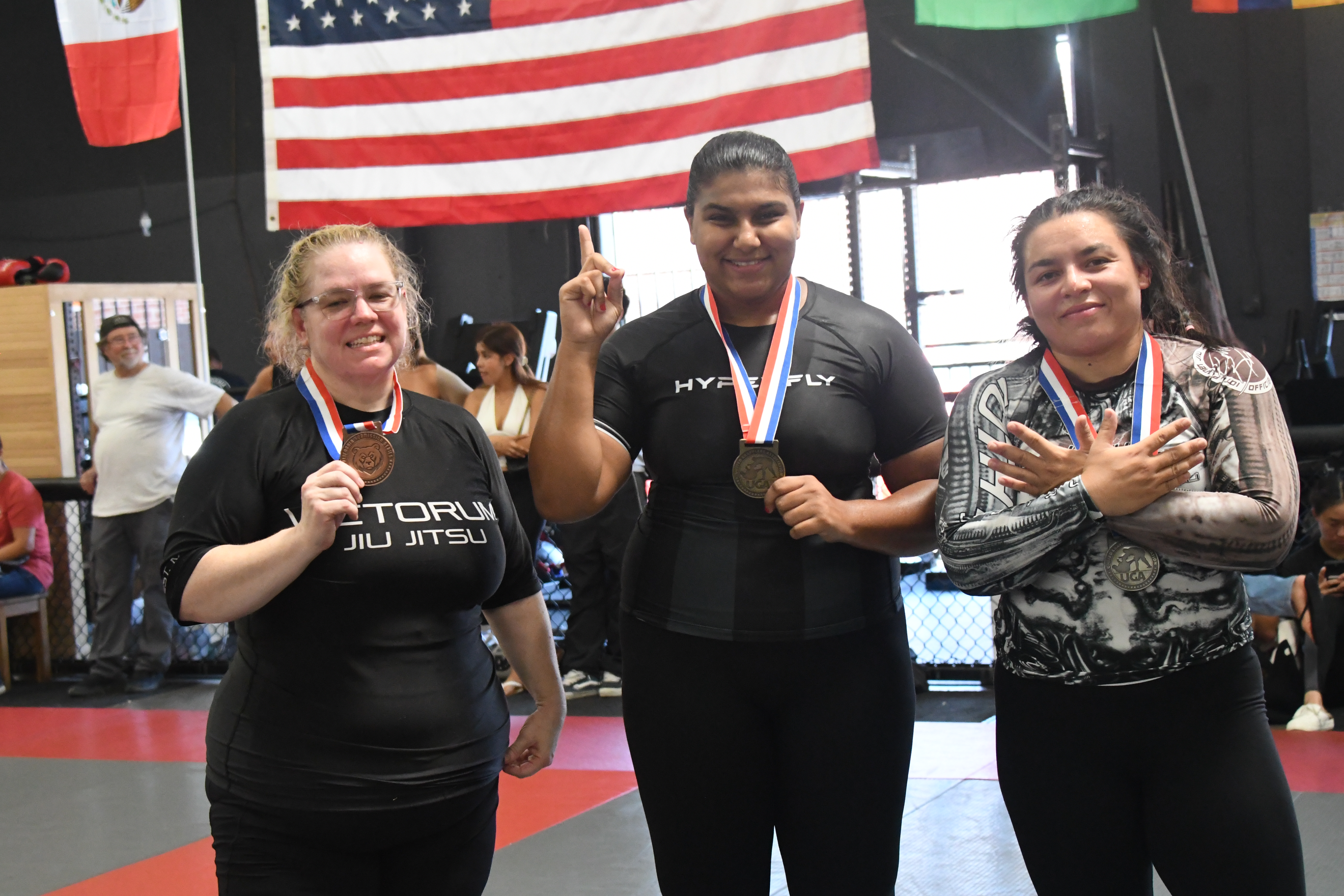
We had four competitors representing 10th Planet Jiu Jitsu: Torrance that day.
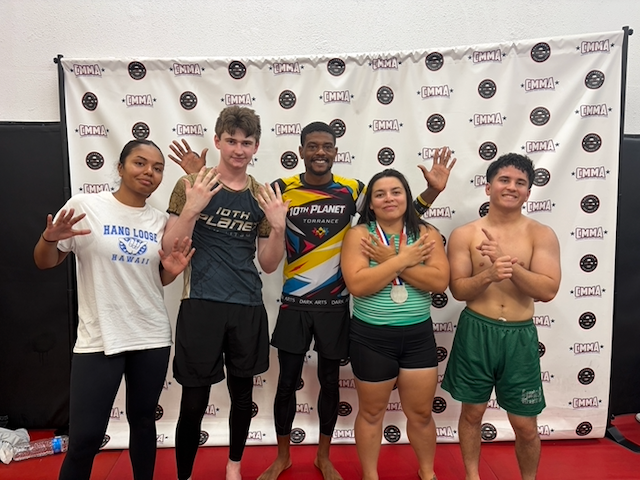
I took silver in my division.
Drew took silver in his division after fighting through five opponents.
Marc did not place.
Anisa did not place, but she walked away proud of her final match.
Anisa was disappointed that Sensei and I could not be in her corner for her match for third place because I was competing at the same time. That was hard for me as her coach, too.
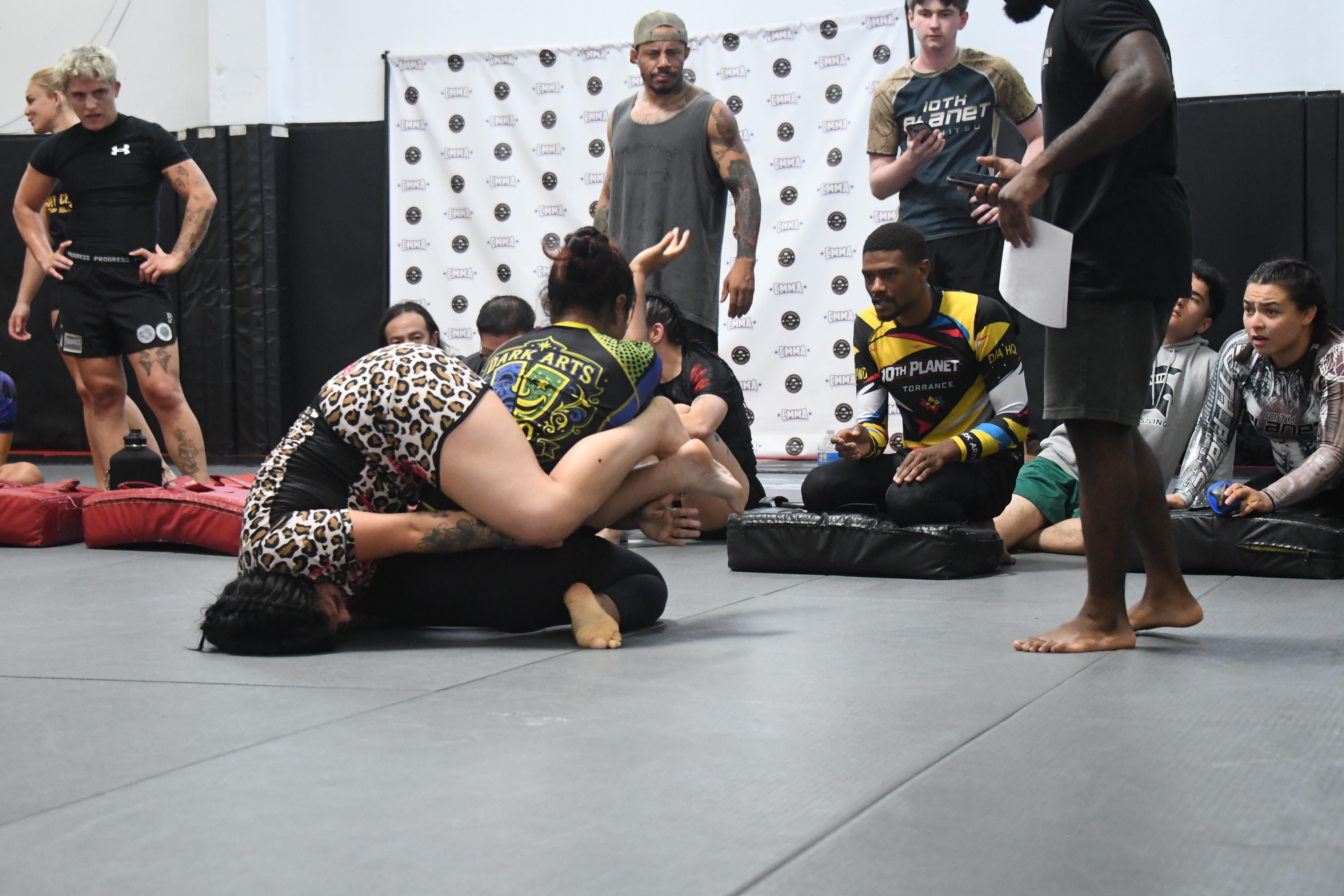
But from what she told me afterward, she finally found her rhythm. She felt the best she had all day, stayed active, and attacked at every opportunity. She ultimately lost in overtime, but the result did not tell the full story of that match.
Not every meaningful performance ends with a medal. Sometimes the breakthrough is finally feeling like yourself out there—and recognizing that you are closer than the bracket makes it look.
What Did Competing Teach Me About Getting Older?
The older you get, the less you give a fuck.
Not in a careless way.
In a “freer” way.
At 26, I thought I needed to prove that I belonged. At 34, I was more interested in finding out what was still possible.
That distinction changes everything.
I was happy with both performances. Maybe my expectations were low. Maybe I understood that returning was already an accomplishment. Maybe I have finally learned that performance should be evaluated against the circumstances, not against an imaginary version of myself who has unlimited time, perfect conditioning, and no responsibilities outside the gym.
A few things became clear:
A loss does not erase your experience.
A new body does not mean a broken body.
Postpartum does not mean finished.
A long break does not cancel your identity as an athlete.
You can be underprepared and still be brave enough to try.
Your students, children, and teammates learn from your recovery: not only your victories.
Competing younger and stopping is common. Life gets busy. People become parents. Work becomes demanding. Injuries happen. Training partners move away. Weight changes. Confidence gets buried under responsibility.
Then one day, the idea of competing again starts to feel embarrassing.
It is not.
The nervous system remembers fear, but it also remembers how to adapt. The mind-body connection is not a slogan. It is built through exposure: stepping back onto the mat, feeling the nerves, breathing through them, and discovering that the moment is survivable.
What Would I Tell Someone Afraid to Compete Again?
I would not tell anyone to ignore their circumstances.
I would tell them to acknowledge those circumstances honestly.
If you are postpartum, recovering from an injury, returning after years away, or carrying extra weight, you do not need to pretend that nothing has changed. Something has changed.
That does not mean you cannot begin again.
Before signing up, ask:
Can I train consistently enough to feel safe?
Can I accept that my performance may look different this time?
Can I prepare without punishing myself?
Can I separate my identity from the result?
Do I have coaches and teammates who will support the process?
At 10th Planet Jiu Jitsu: Torrance, our community in the South Bay has always been one of the reasons I keep showing up. The room is full of people at different stages: complete beginners, experienced colored belts, parents, competitors, and athletes rebuilding their rhythm.
That matters.
A supportive room does not remove the pressure. It gives you somewhere to put it.
Why Am I Running It Back?
Because I am the kind of person who wants to run it back.
I will compete again in December.
Not because I need to erase the loss. Not because I believe one more tournament will settle every insecurity. I am going back because I learned something valuable by returning the first time:
Trying is better than not trying at all.
The two versions of me who competed at 26 and 34 were not the same athlete. They had different bodies, different responsibilities, different expectations, and different kinds of courage.
Both versions were valid.
The blue belt needed to prove she could win.
The brown belt needed to prove she was willing to show up.
That may be the deeper lesson of getting older. You stop waiting for perfect conditions. You stop demanding certainty before taking action. You understand that the most meaningful victory may be walking into the room when you are not in your best shape, when the bracket is intimidating, when motherhood has changed your schedule, or when your last competition was ten years ago.
You go anyway.
Then you see what happens.


HOLD POLICY
To place a membership on hold, members must complete the Time Extension Form at least 30 days before their next billing cycle. To read full Hold Policy for members please read here.
CANCELLATION POLICY
In case a student needs to terminate their membership, both the participant and buyer should fill out the Cancellation Form with the student's name and the reason for the cancellation. The cancellation form should be submitted within 60 days of the billing cycle. Failure to do so will result in the payment of the monthly tuition fee. Some membership types may have different cancellation policies, so please check your email agreement for further details.The cancellation will be processed regardless of the reason, but we would appreciate it if students could share the reason as it would help us with our process and quality management. Students who have cancelled their account may rejoin the gym at any point in the future without any additional fees, and they can simply restart their monthly gym dues. If you have any questions or concerns, please feel free to ask.
REFUND POLICY
All gym membership fees associated with our gym services are non-refundable. We may consider refunds or credits in exceptional circumstances at our discretion. To request a refund or credit, please submit a written request to our front desk at [email protected] with necessary documentation. If you have any questions or concerns, please contact our front desk.
PRIVACY POLICY
By participating in classes, I hereby grant to 10th Planet Jiu Jitsu Dark Arts (Torrance) and its legal representatives and assigns, the irrevocable and unrestricted right to use and publish photographs, videos, my likeness, voice and/or any other media of me (collectively "Media"), or in which I may be included, for editorial, trade, advertising, and any other purpose and in any manner and medium; and to alter and composite Media without restriction and without my inspection or approval. I hereby release 10th Planet Jiu Jitsu Dark Arts (Torrance) and its legal representatives and assigns from all claims and liability relating to said Media.